Cart
0
Dark Chocolate Lovers’ Essential Pairing



Cookies and PCOS don’t have to be enemies. The right cookie — made with the right ingredients — can satisfy your sweet tooth without spiking insulin or worsening hormonal symptoms. The wrong one, however, can trigger a cascade of blood sugar disruption that aggravates everything from acne to irregular cycles.
Here’s your complete guide to choosing the best cookies for PCOS — and which ones to leave on the shelf.
Most store-bought and bakery cookies are made with a combination of refined flour (maida), refined sugar, and dairy — three ingredients that are particularly problematic for women with PCOS:
The solution isn’t to give up cookies. It’s to choose cookies built on entirely different foundations.
The sweetener matters enormously. Look for cookies sweetened with whole date powder, raw honey, coconut sugar, or stevia — all of which have a lower glycemic impact than white sugar. Whole date powder in particular is excellent: it comes with fiber intact, which slows glucose absorption and blunts the insulin response.
The best PCOS-friendly cookies use almond flour, oat flour, or coconut flour instead of maida. These are fiber-rich, lower in net carbohydrates, and digest more slowly — keeping blood sugar steady rather than spiking it.
Fats from almonds, coconut oil, and peanut butter are metabolically beneficial for women with PCOS. They slow digestion, increase satiety, and support the production of sex hormones. Cookies made with these fats won’t spike insulin the way refined carbohydrates do.
Almonds, dark chocolate, and flaxseed are all excellent sources of magnesium — a mineral that women with PCOS are disproportionately deficient in. Magnesium supports insulin sensitivity, reduces cortisol, and helps regulate the adrenal contribution to androgen production. A cookie that delivers magnesium is a cookie that’s actively working for your hormones.
Not every woman with PCOS is sensitive to dairy or gluten, but many are. Dairy can elevate IGF-1, and gluten can contribute to gut inflammation in sensitive individuals — and gut health is increasingly recognised as central to hormonal regulation. Cookies that are free from both are a safer default.
Arguably the most PCOS-optimised cookie available in India. Each cookie contains just 26 calories and 1.2g net carbs, with a whole roasted almond in clean-label dough, dipped in 60% vegan dark chocolate. Sweetened with whole date powder. Made with blanched almond flour, peanut butter, and golden flaxseed for magnesium, healthy fats, and fiber. Gluten-free, dairy-free, soy-free, and vegan.
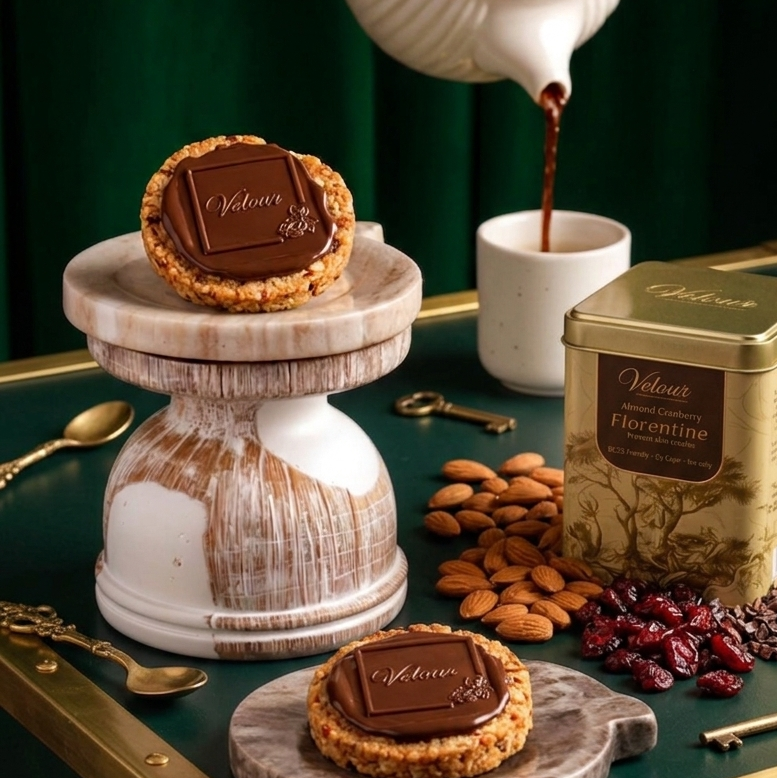
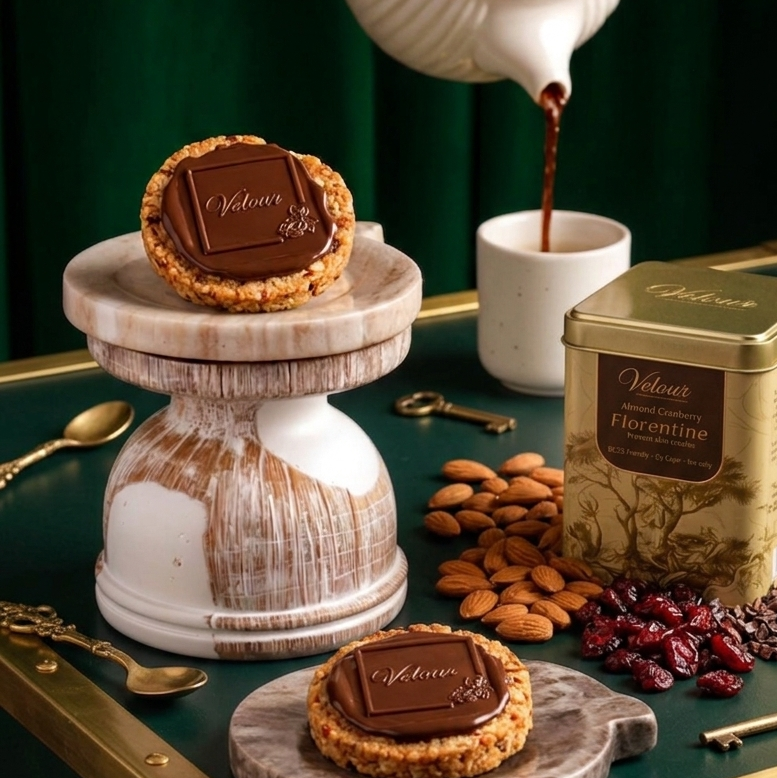
A thin, crispy oat-based lace cookie with roasted almonds and tart cranberries, hand-dipped in bean-to-bar dark chocolate. Sweetened with raw honey and coconut oil — no refined sugar, no maida. Oats provide beta-glucan fiber, which has been shown to improve insulin sensitivity. Almonds add magnesium and healthy fats. A more indulgent option that still clears every PCOS checkpoint.
Want the best of both? Try the Hormonal-Friendly Cookie Bundle — both cookies together in one set, curated for hormone-conscious snacking.
Can I eat cookies if I have PCOS?
Yes — but the ingredients matter. Cookies made without refined sugar, maida, or dairy and built on low-GI foundations like almond flour, oats, and natural sweeteners are compatible with a PCOS-friendly diet.
Are oat-based cookies good for PCOS?
Yes, when made without refined sugar. Oats contain beta-glucan, a soluble fiber that slows glucose absorption and has been shown to improve insulin sensitivity. Oat-based cookies sweetened with honey or date powder are a solid choice for women with PCOS.
Is almond flour better than maida for PCOS?
Significantly. Almond flour is low-GI, high in magnesium and healthy fats, and much lower in net carbohydrates than maida. It digests slowly, keeps blood sugar stable, and supports rather than disrupts insulin sensitivity.
Can I eat dark chocolate cookies with PCOS?
Yes — if the chocolate is high-cacao (60%+) and the cookie base is free from refined sugar and maida. Dark chocolate adds magnesium, flavonoids, and antioxidants that actively benefit PCOS management. Avoid cookies with milk chocolate or white chocolate coatings.
What is the best cookie for insulin resistance?
Look for cookies with under 5g net carbs per serving, no refined sugar, and a base of almond flour or oats. The London Almond Cookie from Velour — with 1.2g net carbs and no refined sugar — is one of the lowest-impact options available.
Disclaimer: This article is for informational purposes only and does not constitute medical advice. Please consult your doctor or registered dietitian for personalised guidance on managing PCOS through diet.